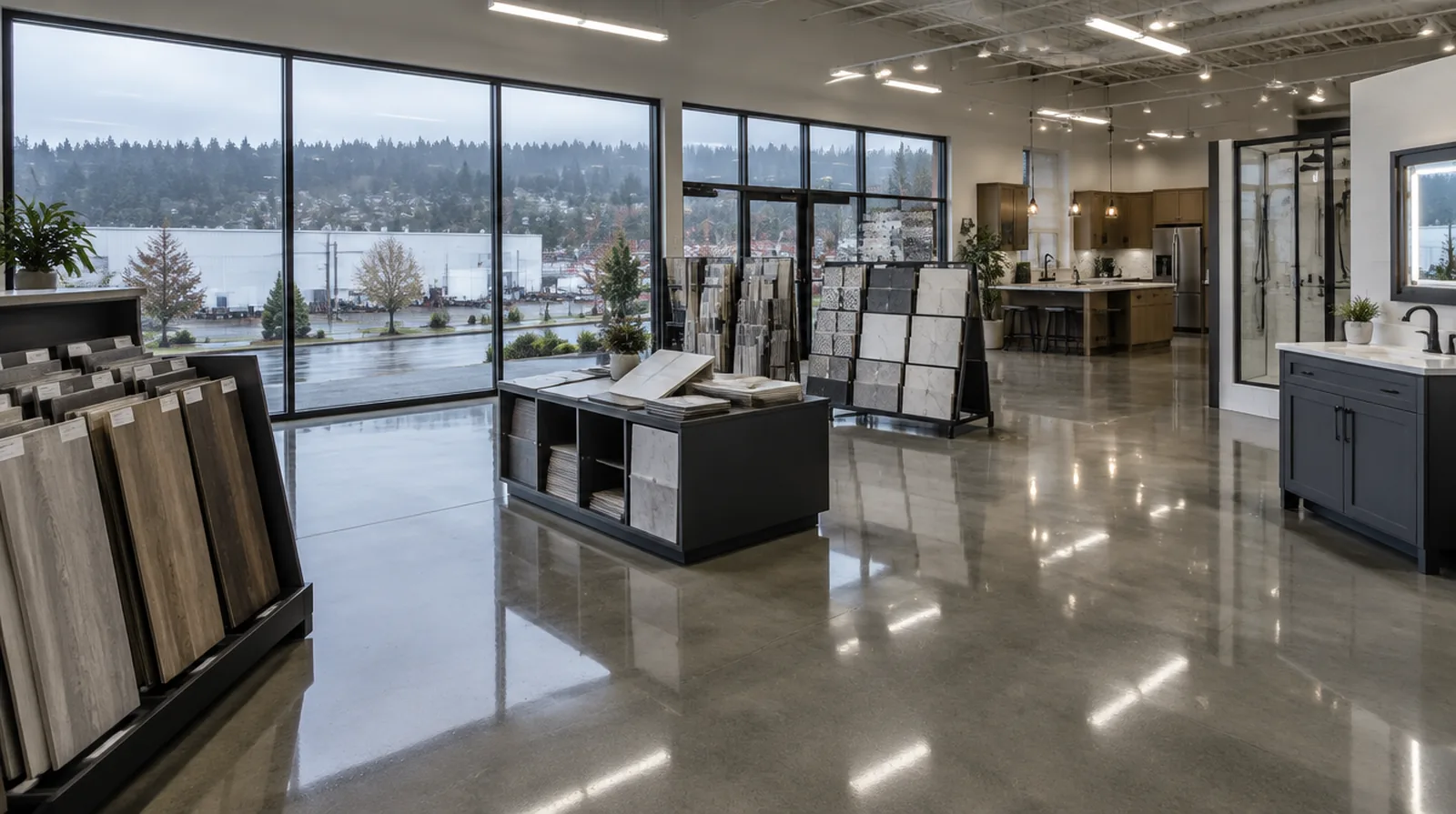
What polishing does
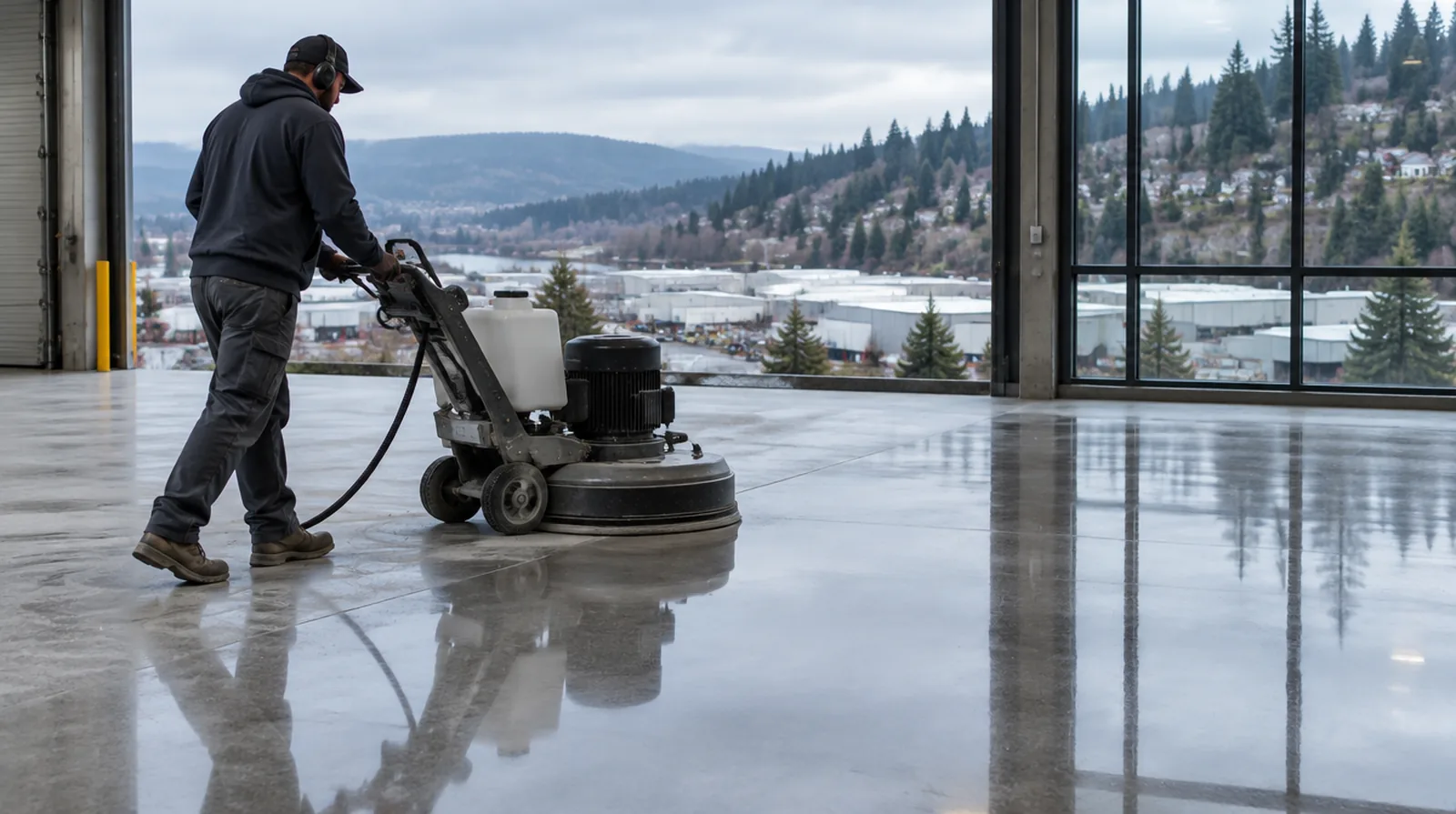
Polishing is a mechanical process. We grind the slab with progressively finer diamond tooling, much like sanding wood from coarse to fine grit. Along the way we apply a chemical densifier that reacts with the concrete to make the surface harder and less porous. The final passes with very fine resin pads bring out a reflective sheen. A penetrating guard is applied at the end to help resist stains. There is no coating to peel because the floor is the concrete itself.
Why warehouses choose it
Many distribution and storage buildings in the valley choose polished concrete because it is durable, bright and inexpensive to maintain. A polished slab stops dusting, reflects more light so facilities can use fewer fixtures and holds up to forklift traffic without a coating that might wear through. Ride-on scrubbers keep it clean with plain water or a neutral cleaner.
Choosing a look
The appearance depends on how deep we grind. A cream finish stays at the top surface and shows little aggregate. A salt and pepper finish exposes fine sand. A full aggregate finish grinds deeper to reveal the stones in the mix. The sheen can range from a soft satin to a high gloss. Dyes can add color, from warm browns to cool grays and blacks, and can be used to create borders or logos.
Polished concrete in homes
Modern and remodeled homes increasingly use polished concrete on main floors and basements. It works especially well with radiant heat, stands up to pets and kids and pairs nicely with area rugs and wood finishes. On existing homes, we can often polish a slab that was hidden under carpet or vinyl for decades, after removing the old adhesive.
What we look for first
Not every slab polishes evenly. Patches, old repairs, tile adhesive and deep stains can show in the finished floor. We inspect the concrete, grind a test spot if needed and explain honestly how it will look. Sometimes a lightly polished or grind-and-seal finish is the better value. When the slab is badly damaged, a coating may be a smarter choice.
Polishing new construction
On new buildings, planning ahead produces the best results. If the slab is placed and finished with polishing in mind, the aggregate exposure is more uniform and the floor needs less grinding. We are happy to talk with contractors and owners during the design stage.
Grind and seal as an alternative
A grind and seal floor uses a few grinding passes followed by a clear penetrating or topical sealer. It costs less than a full polish and gives a similar look in spaces where high gloss is not needed, such as back-of-house areas, storage rooms and shops.
Maintenance
Dust mop daily in commercial spaces and use an auto scrubber with a neutral cleaner. In homes, a dust mop and damp mop are enough. Every few years, a burnishing visit can bring back the shine in high-traffic areas. There is no waxing or stripping, which is a major savings for facilities.
Light reflectivity and energy
A polished floor bounces a surprising amount of light back toward the ceiling. In large warehouses and shops, that can brighten aisles and work areas, improve visibility for forklift drivers and allow fewer fixtures to do the same job.
Timing
Polishing time depends on the size of the floor and the finish you choose. A residential basement may take two days. A large warehouse is scheduled in phases. We give you a clear schedule in your written estimate.
Talk to us about polished concrete
Call (000) 000-0000 for a free estimate.