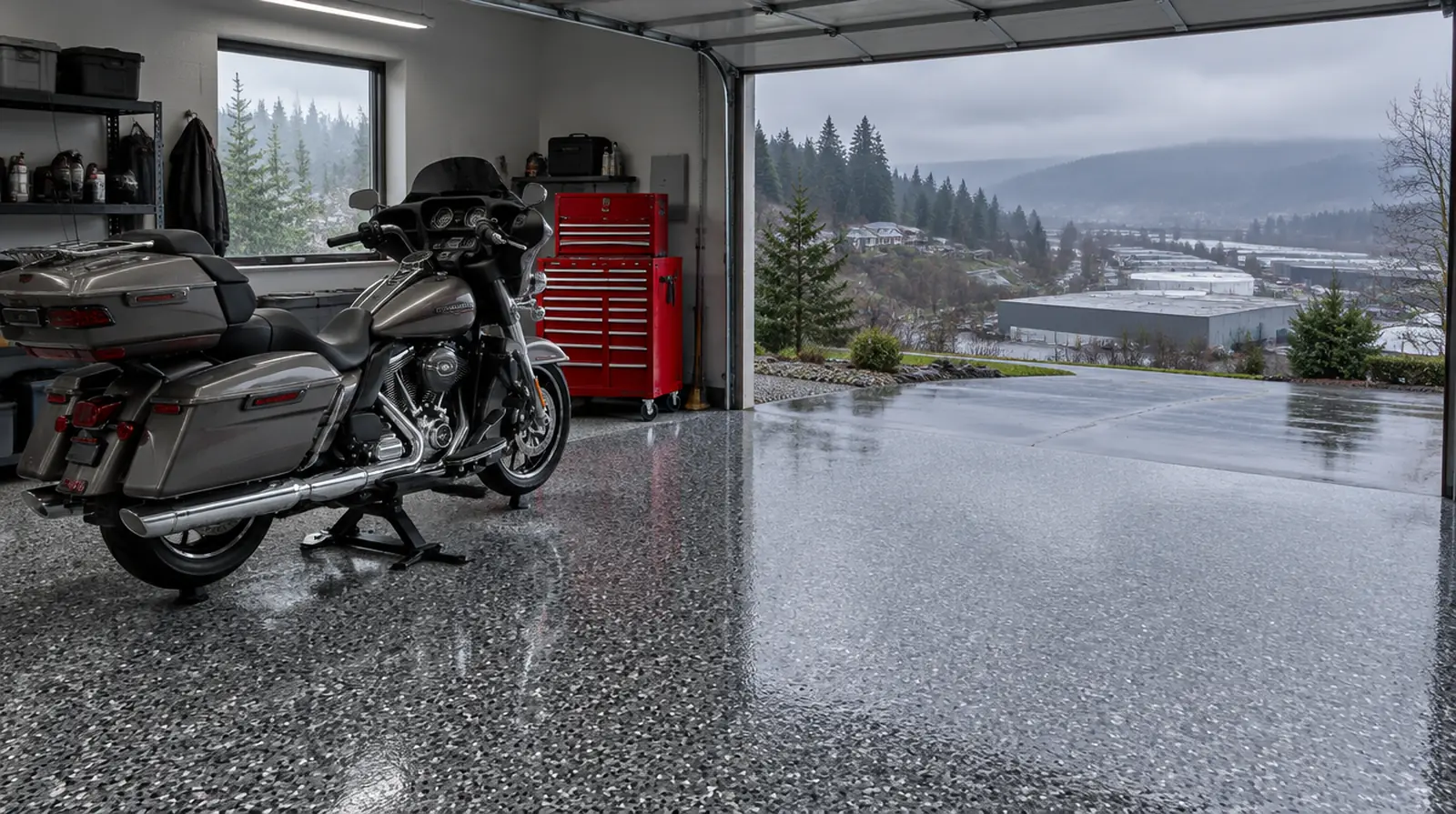
What a flake floor is
A flake floor starts with a pigmented epoxy or polyaspartic base coat. While it is still wet, we throw colored vinyl chips across the surface until it is fully covered. After it cures, we scrape and vacuum off the loose chips, then seal everything with one or two clear topcoats. The result is a thick, layered floor with a speckled granite-like look and a subtle texture underfoot.
Why it is so popular for garages
A solid-color floor shows every footprint, tire mark and speck of dust. A flake blend hides them. Between cleanings, the floor still looks tidy, which matters a lot when the garage doubles as the main entry to the house. The texture of the chips also gives better traction than a smooth gloss, especially when the floor is wet from rain or melted snow off the car.
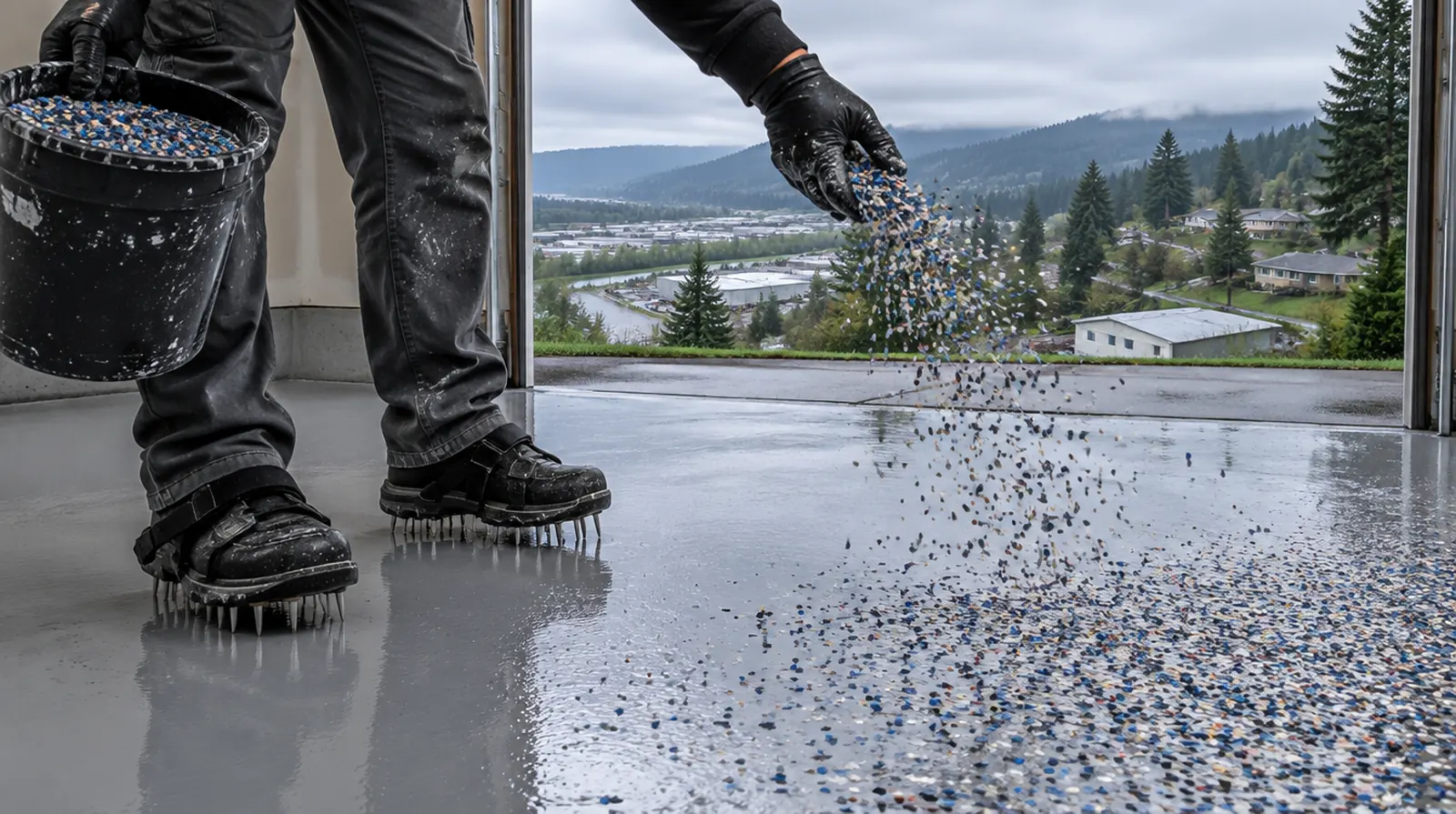
Full broadcast versus light broadcast
We usually recommend a full broadcast, where flakes cover the base coat completely. It produces the most durable floor, because the chips add body and the topcoat bonds to a uniform surface. A partial or light broadcast shows more of the base color and costs a little less, but it is better suited to light-use rooms than to busy garages or shops.
Choosing a blend
Blends come in dozens of combinations. Medium grays with black and white specks are a common pick because they go with almost any home exterior and hide everyday dirt. Warm tans and browns suit older homes with wood trim and earth-tone siding. Darker charcoal blends look sharp in shops and hide grease. We bring sample boards to your home so you can see them next to your cabinets and walls in your own light.
Where flake floors work well
- Attached and detached garages.
- Workshops and hobby spaces.
- Laundry and mud rooms.
- Basement utility areas.
- Commercial restrooms, locker rooms and break rooms.
- Auto service bays, gyms and kennels.
Preparation still comes first
Flake does not make up for poor preparation. Every floor is diamond ground, cracks are repaired and moisture is tested before we mix any material. If the slab has high moisture vapor, we use a moisture-mitigating primer so the system does not blister later. The flakes only look good if the layers underneath are bonded properly.
Topcoat options
For most garages we finish flake floors with a polyaspartic clear coat. It is harder than standard epoxy, resists hot tire pickup and does not yellow in sunlight. For commercial spaces with chemicals or heavy cleaning, we may recommend a urethane. Either can be adjusted with a fine grit to control how textured the final surface feels.
Durability you can count on
A well-installed flake floor stands up to car traffic, dropped tools, rolling tool chests, bikes and pets. If something heavy does chip the surface, the speckled pattern hides small marks, and spot repairs blend in more easily than on a solid color. That forgiving nature is another reason flake systems are the most common garage choice we install.
Flake floors for businesses
Restaurants, salons, veterinary clinics, gyms and auto shops often choose flake for the same reasons homeowners do: it hides traffic between cleanings, offers grip and can be matched to brand colors. In commercial rooms we usually run the coating up the wall a few inches as an integral cove base, which seals the joint where floor meets wall and makes mopping much easier.
Cleaning a flake floor
Sweep with a soft broom, then mop with a pH-neutral cleaner. A deck brush helps clean the texture after the muddy months. Avoid harsh acids. That simple routine keeps the floor looking good for many years.
Choose your flake blend
Call (000) 000-0000 for a free estimate.