Why coatings fail
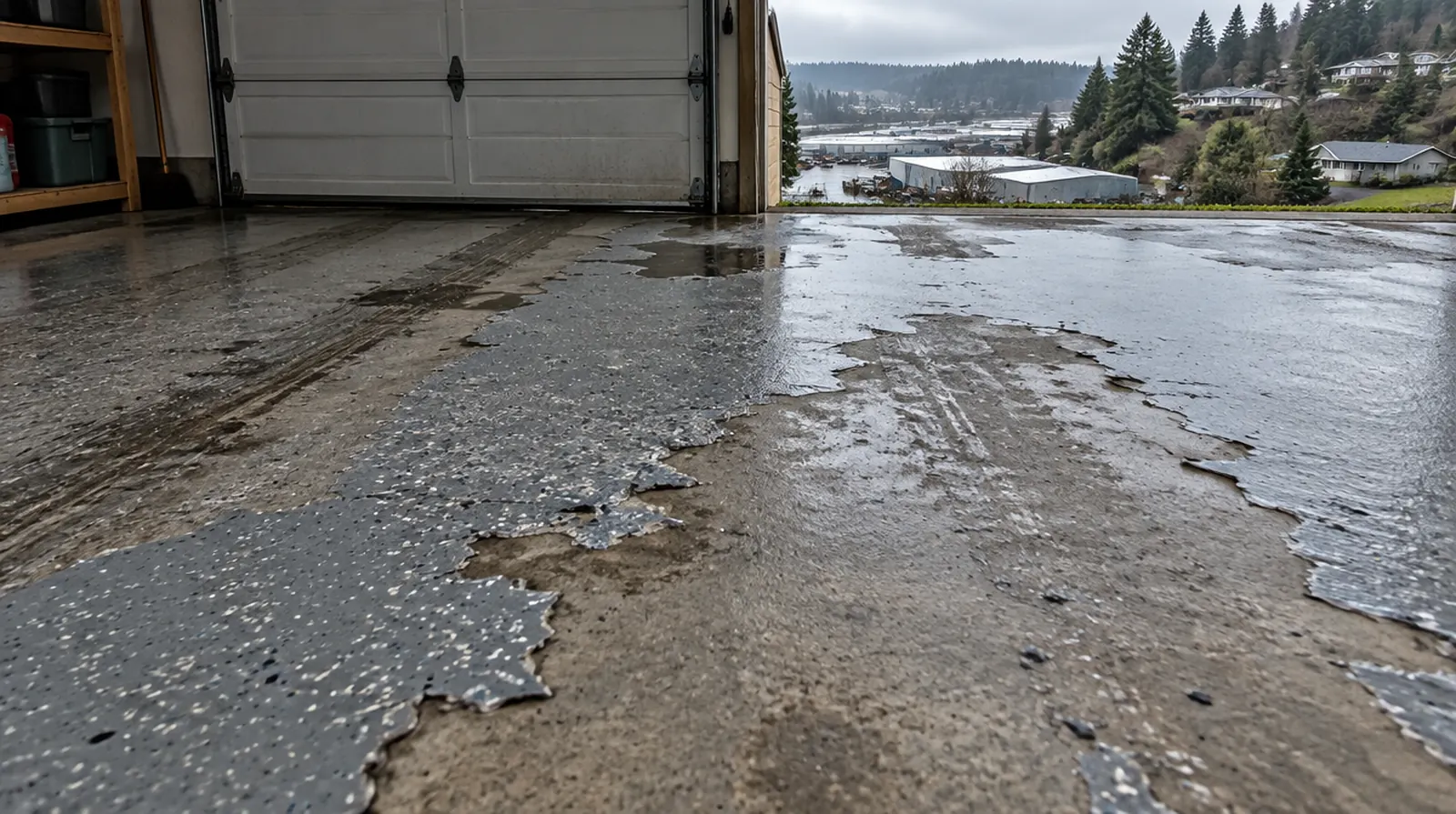
When a floor peels, the coating itself is rarely the real problem. The most common cause is poor preparation: the slab was acid etched or simply cleaned instead of ground, so the coating sat on a weak surface. Other causes include moisture vapor pushing up from below, old sealers or oil left in the concrete, thin consumer-grade products, coatings applied in cold or damp conditions and hot tires lifting a soft finish. Before we suggest any fix, we figure out which of those caused your failure. Otherwise, the repair would fail the same way.
Signs your floor needs attention
- Peeling or lifting where car tires sit.
- Bubbles, blisters or white powder under the coating.
- Chips from dropped tools or jack stands.
- Yellowed or chalky areas near the door.
- Cracks running through the coating.
- Stains that have soaked through a worn topcoat.
Spot repair or full recoat
If the coating is well bonded across most of the floor and the damage is limited to a few chips or one area, a spot repair can make sense. We grind out the damaged area, feather the edges, rebuild the layers and blend the finish. With flake floors, repairs usually blend well. Solid colors and aged finishes are harder to match, so we may suggest a fresh topcoat over the whole floor for an even look.
Removing failed coatings
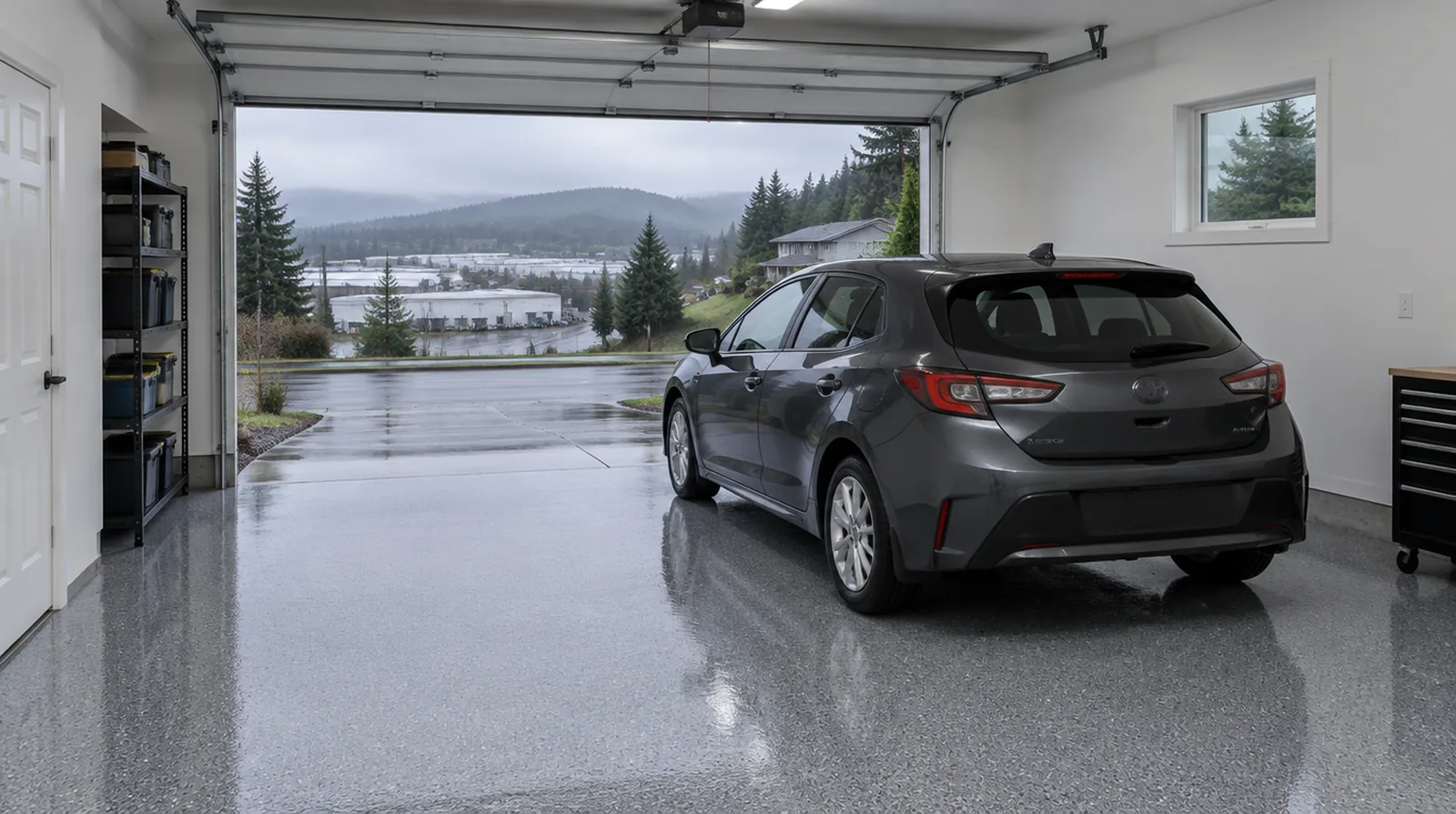
When a coating is lifting in several places, a patch will not hold for long, because the rest of the film is likely losing its bond too. In that case the right answer is to remove the coating completely. We use diamond grinders and, for thicker systems, carbide tooling to strip it down to clean concrete. Then we test moisture, repair the slab and install a new system designed to avoid the original problem.
Moisture problems in the valley
Much of the city sits on a valley floor with a high water table, and hillside homes can have water moving through the soil under the slab. That moisture travels up through the concrete as vapor. When it is trapped under a coating, it creates pressure that causes blisters and peeling. We measure it with calcium chloride or relative humidity tests and, if levels are high, use a moisture-mitigating epoxy primer that blocks vapor and gives the new system a stable base.
Commercial floor repair
In warehouses and shops, coatings wear through along forklift routes, at dock doors and in front of workstations. Joints spall as wheels slam across them. We repair joints with semi-rigid fillers, rebuild broken edges, recoat worn lanes and restripe aisles. Work can be phased around your operation so you do not have to shut the building down.
Repairing other people's work
Many of the floors we fix were installed by someone else or applied from a kit. That is fine. We do not need to know who installed it. We simply inspect the floor, test it and give you a clear recommendation and price for repair or replacement.
What a repair visit looks like
We start by looking closely at where and how the coating is failing, then test adhesion in a few spots and check slab moisture. You get photos, an explanation of the cause and a written estimate for the options that make sense. If removal is needed, we explain why and what the new system will do differently.
Avoiding future problems
Once your floor is restored, a few habits will keep it in good shape: squeegee standing water out during wet months, clean up oil and chemicals quickly, use pads under jack stands and kickstands and avoid harsh acidic cleaners. Most importantly, the new system is built on ground, tested concrete, which is the best protection against a repeat failure.
Get your floor looked at
Call (000) 000-0000 for a free estimate.