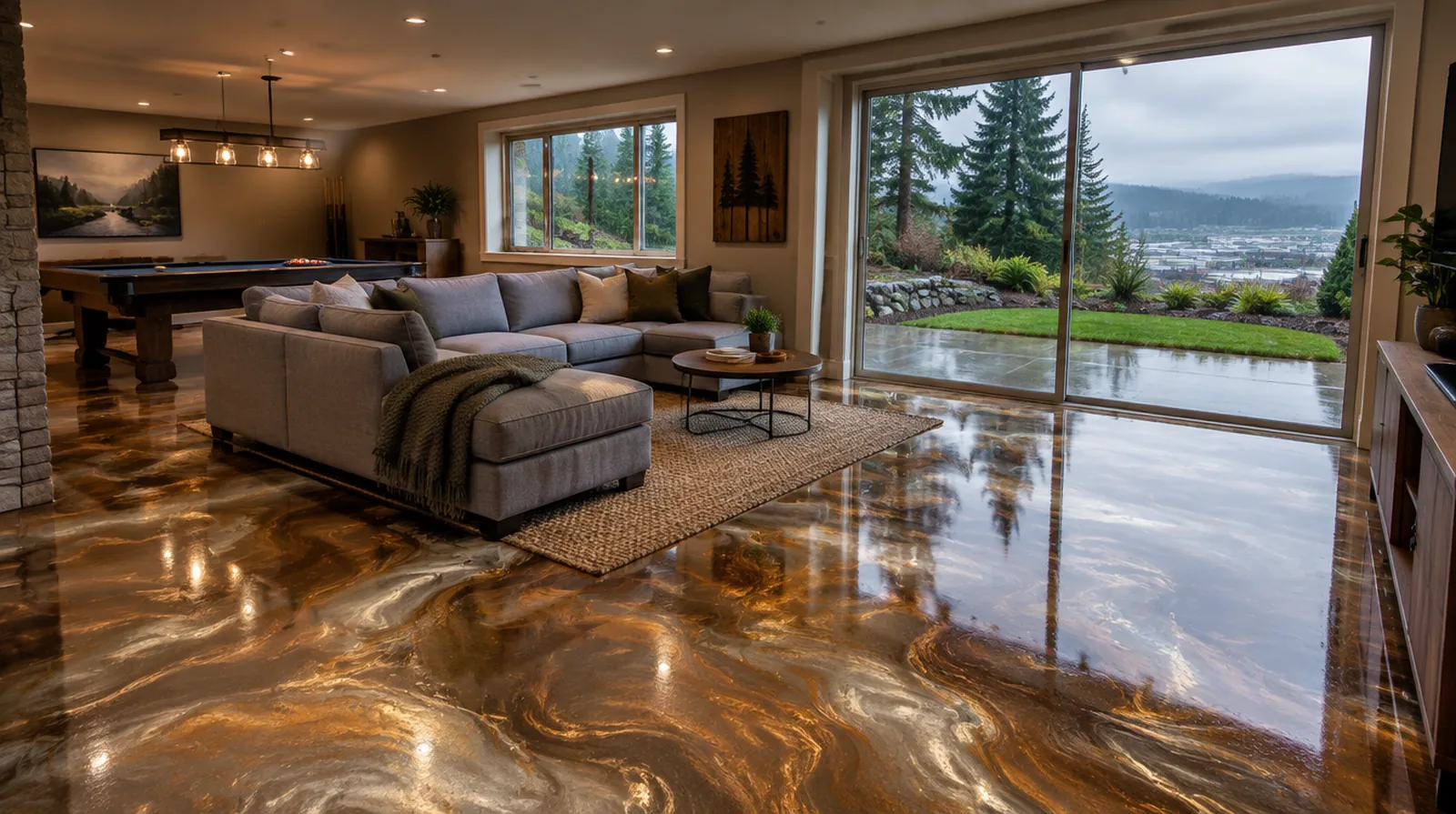
How metallic floors are made
A metallic floor starts with a dark base coat. On top of that we pour a clear epoxy loaded with fine metallic pigment, then work it by hand with rollers, trowels, brushes and sometimes solvent sprays. The pigment flows and settles as the resin levels out, creating waves, cells and veins that look like polished stone, liquid metal or lava. Because each floor is shaped by hand while the resin is wet, no two are alike.
Rooms where metallic shines
Metallic epoxy works best indoors, away from heavy grit and direct, constant sunlight. Popular spaces include finished basements, home theaters, game rooms, bars, home offices, salons, boutiques, showrooms and corporate lobbies. It can go in a garage too, but a garage floor gets scratched by sand and tracked grit, which shows more on a high-gloss metallic than on a flake blend.
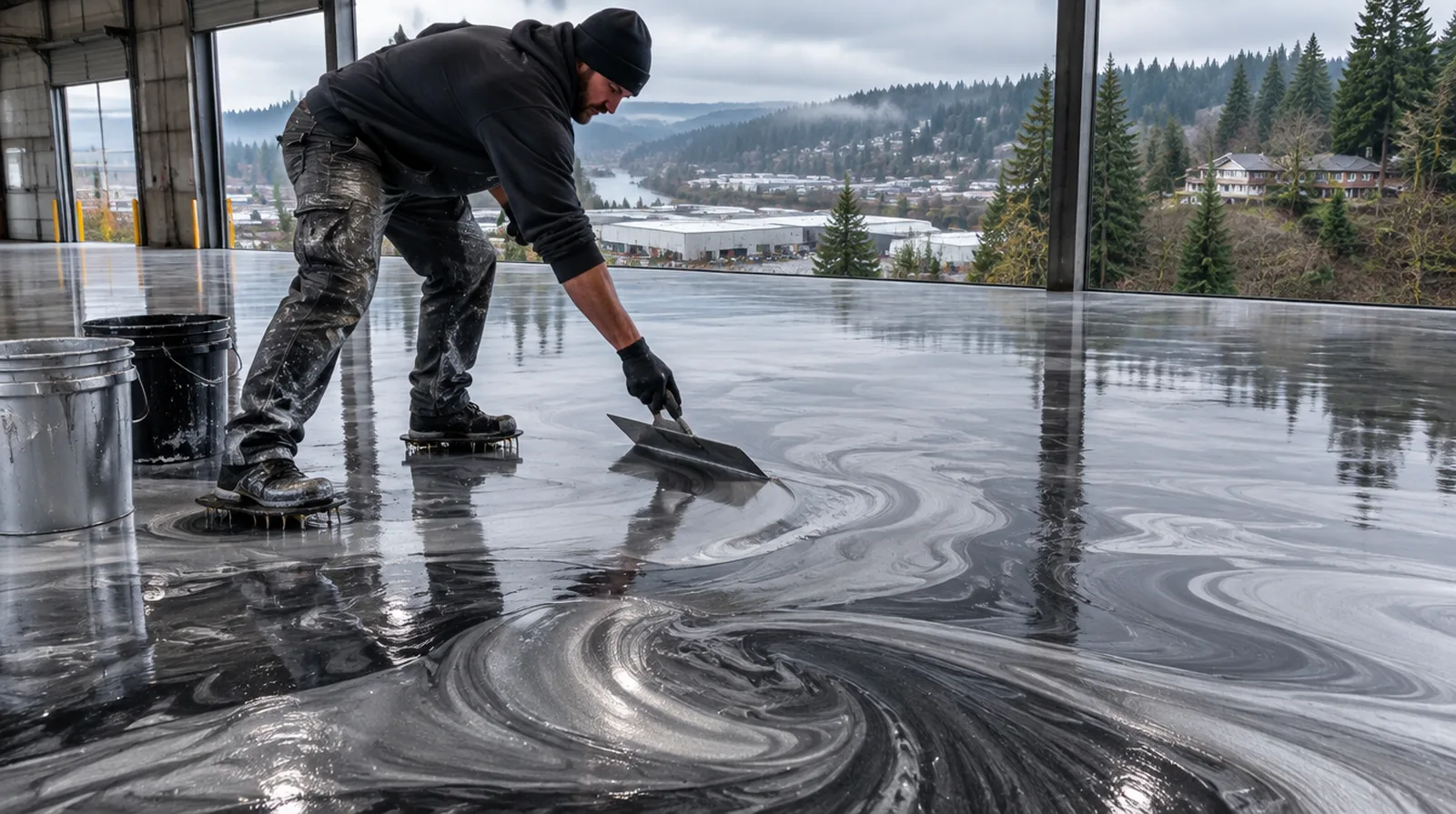
Basements on the hills
Many split-level and daylight basement homes here have lower levels on a concrete slab that was covered with carpet or vinyl. When that carpet gets damp or worn, owners are often surprised by how good the slab can look under a metallic coating. Because the valley and lower hillsides hold a lot of ground moisture, we always test the slab first. If vapor levels are high, we use a moisture-mitigating primer before any decorative layers.
Choosing colors
Common combinations include charcoal with silver, bronze with copper, deep blue with pearl and white with soft gray. Darker bases give more contrast and depth. Lighter bases feel calm and airy. We can show you photos of completed floors and make small sample boards so you can see how the colors behave in your room's light. Keep in mind that every pour is unique, so the final floor will share the character of the sample rather than match it exactly.
Preparation and leveling
A metallic floor shows the surface under it more than any other system. Cracks, ridges and patches can telegraph through the clear layers. We grind thoroughly, fill and feather every repair and apply a skim coat if needed so the base is flat and smooth. Expansion and control joints are discussed before we start, because they can be filled or honored depending on the building.
Protecting the finish
We seal metallic floors with a clear urethane or polyaspartic topcoat that adds scratch resistance and keeps the floor from yellowing. You can choose high gloss, satin or matte. A satin sheen hides fine scratches better and has a softer look that many homeowners prefer in living spaces. Slip-resistant additives are available for kitchens, bars and entryways.
Timeline
Most metallic floors take two to four days, including grinding, repairs, the base coat, the metallic layer and the topcoat. Each layer must cure before the next goes down. Furniture can usually return a few days after the final coat. We give you an exact schedule during the estimate.
Living with a one-of-a-kind floor
Owners often tell us the floor becomes the conversation piece of the room. Light from windows and fixtures shifts across the pattern through the day, so the floor looks a little different every morning and evening.
Day-to-day care
Dust mop often to remove grit, which is the main cause of fine scratches. Damp mop with a pH-neutral cleaner. Put felt pads under chair and table legs, and use mats at entrances. With that care, a metallic floor stays a striking focal point for years.
Commercial metallic floors
Showrooms, tasting rooms and offices along the valley use metallic floors to make a strong first impression without the cost or upkeep of stone. For these jobs we plan around business hours and can match the floor to your branding.
Plan your metallic floor
Call (000) 000-0000 for a free estimate.