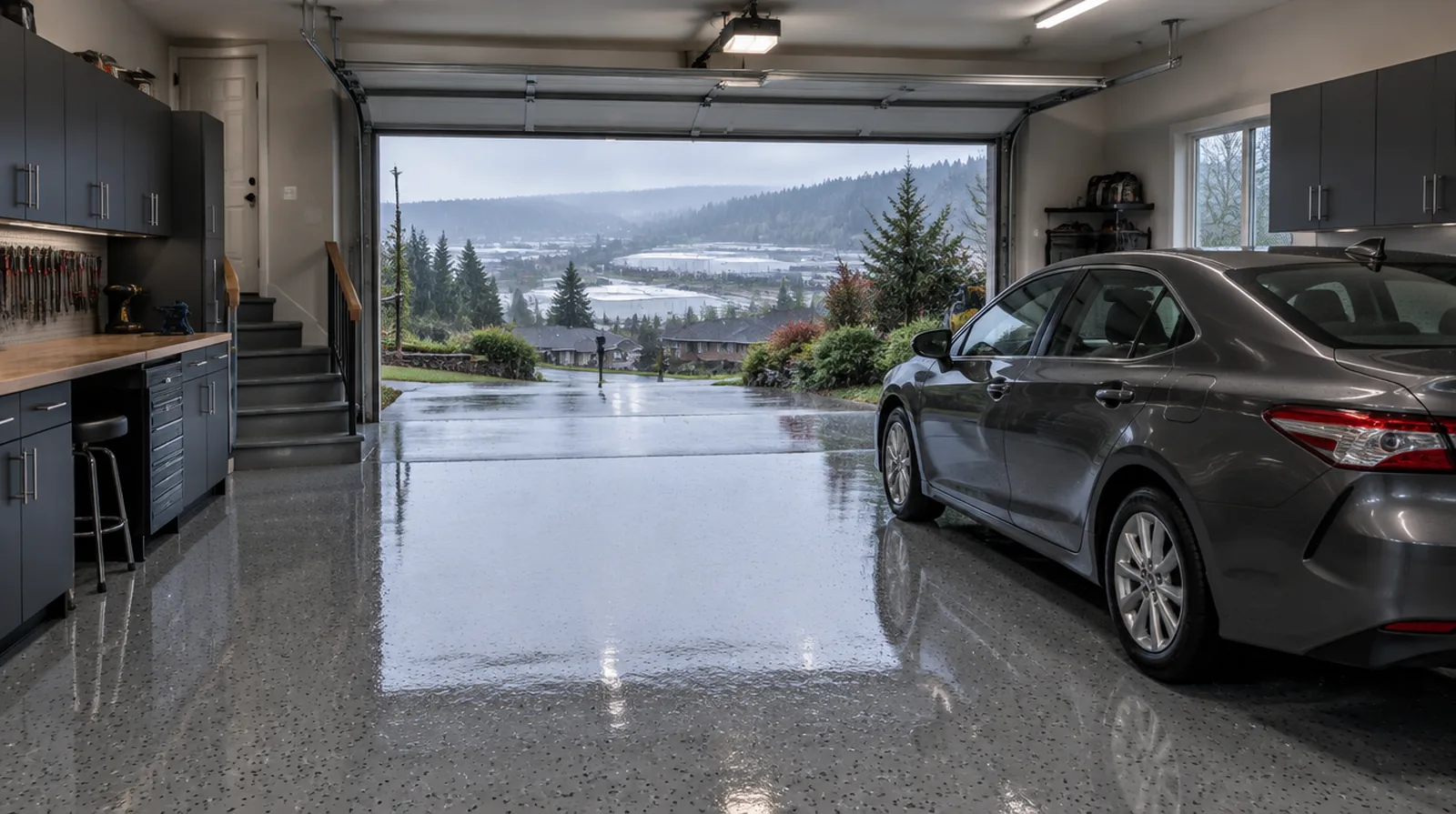
What a garage floor goes through here
A garage in this part of the state lives through months of rain. Tires carry water, grit and road film inside every day. Cars drip oil and coolant, kids drag bikes in and out, and many households use the space as a workshop, gym or storage room as well as parking. Uncoated concrete absorbs all of it. Stains set in, the surface dusts as it wears and the floor never looks clean no matter how often you sweep. A real epoxy system solves those problems by sealing the slab under a tough, cleanable surface.
Not a kit from the hardware store
Store-bought kits are thin, water-based coatings applied over acid-etched concrete. They can look good for a few months, but hot tires soften them, and they lift in patches once moisture or oil gets underneath. A professional system is many times thicker and goes down over diamond-ground concrete, which gives the primer a rough, open surface to bite into. That difference in preparation and film build is why our floors hold up while kits peel.
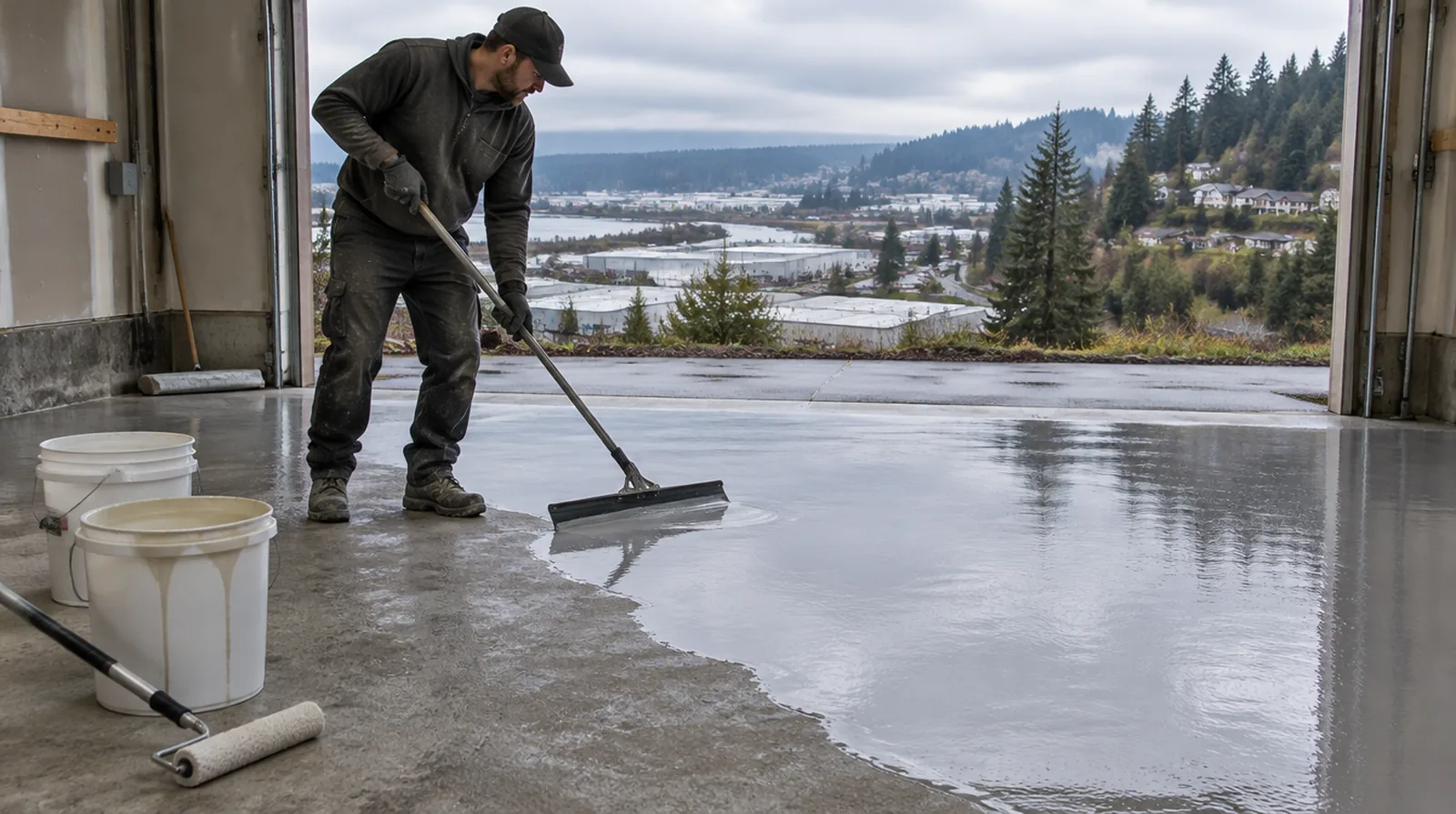
Our installation process
- Moisture testing and an inspection for sealers, paint and oil.
- Diamond grinding with a dust-collecting vacuum.
- Crack and joint repair, plus patching of pits and spalls.
- A penetrating epoxy primer.
- A pigmented base coat, with an optional flake broadcast.
- A polyaspartic or urethane wear coat with optional slip resistance.
Older slabs on the hills
Homes built decades ago often have garage floors with settlement cracks, broken corners at the door, old paint or oil soaked deep into the concrete. We degrease and grind out contamination, fill cracks with fast-setting repair material and rebuild damaged edges. The goal is a level, sound base so the finished floor looks uniform and the coating does not telegraph every old flaw.
Newer homes in subdivisions
New construction slabs are usually in better shape, but builders often spray on a curing compound or sealer. Those products block a coating from bonding, so we grind them off completely. Newer slabs can also hold more moisture, so testing matters just as much.
Water at the door
The first few feet inside the garage door take the most abuse. Rain blows in, tires drop water and grit, and the edge of the slab is often cracked or uneven. We give that zone extra attention during prep, cut a keyway along the edge so the coating locks in rather than ending at a feather edge, and use a UV-stable topcoat that will not chalk where sunlight hits.
Shops and hobby garages
If you rebuild engines, weld, woodwork or brew, your floor sees more than a typical parking space. We can build a thicker base, choose a chemical-resistant topcoat and keep the finish lighter so it bounces more light around the room. Dropped tools and rolling jacks are much less likely to chip a properly bonded system.
Colors and finishes
Most homeowners choose a gray, tan or mixed flake blend because it hides dust and tire marks. Solid colors look clean and bright, especially in shops. We can add a slip-resistant additive to the topcoat so the floor is not slick when wet, which is a real concern during our long rainy season.
How long it takes
A standard two-car garage usually takes one to three days depending on the condition of the slab and the system you choose. You can typically walk on the floor within a day and park on it a few days later. We will give you exact timing for your products before we start so you can plan where to park in the meantime.
Keeping it clean
Sweep regularly and mop with warm water and a mild, pH-neutral cleaner. Use a squeegee to push standing water out the door during wet weather. Clean up oil drips promptly, and put a mat under the car if it tends to leak. That is about all the care a quality garage floor needs.
Ask about your garage floor
Call (000) 000-0000 for a free estimate.