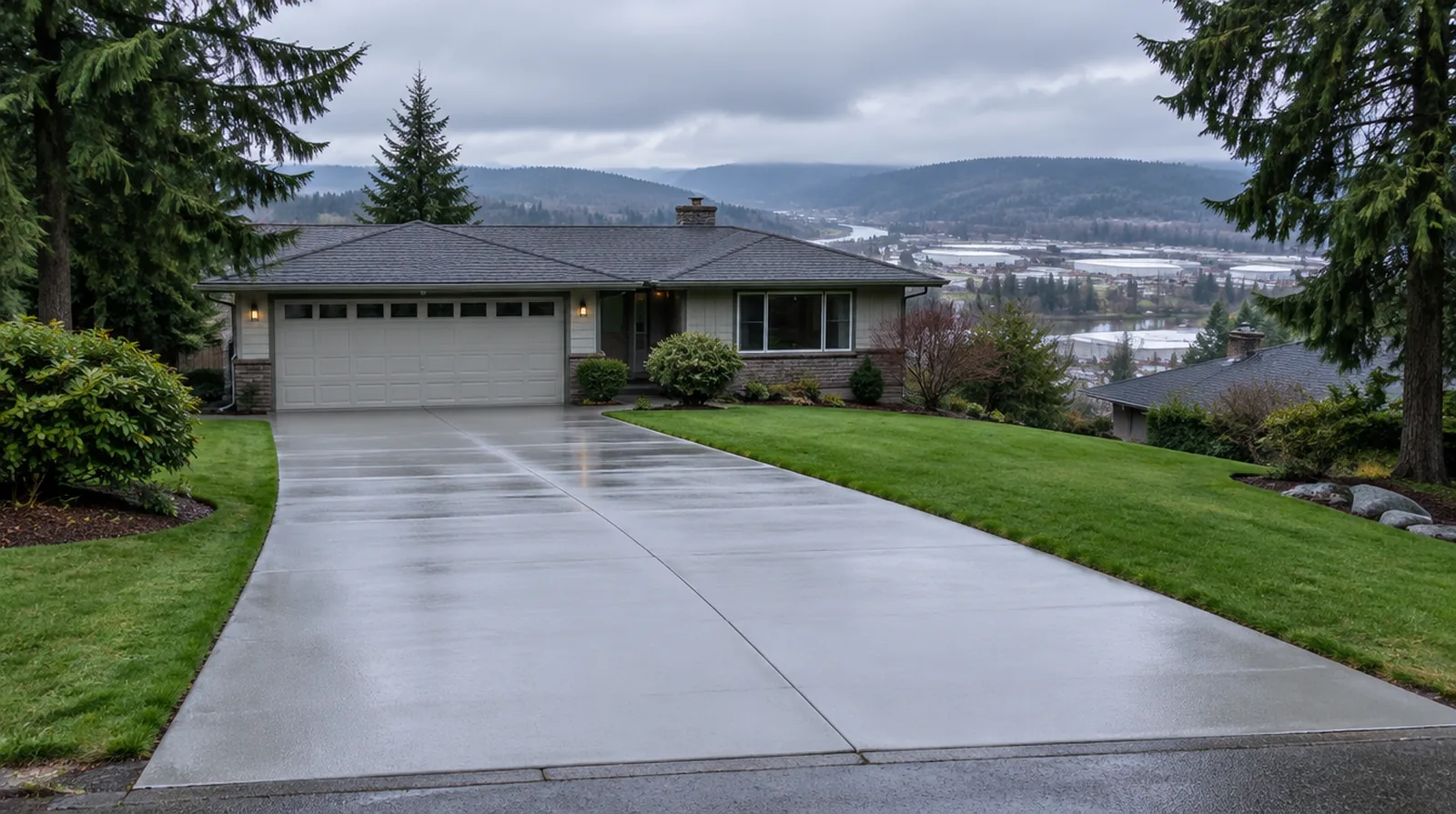
Why driveways look tired
Driveways take years of tire traffic, oil drips, rain, moss and the occasional hard freeze. In shaded spots under firs and maples, green and black growth creeps across the slab. Oil and rust stains collect near the garage. On older driveways, the surface may be scaling or pitted, and cracks let water wash out the soil underneath. Replacing a driveway is expensive and disruptive. In many cases, cleaning, repairing and coating the existing slab gives you a driveway that looks and performs far better for much less.
Our approach
- Inspect the slab for cracks, settling, scaling and drainage problems.
- Pressure wash with a surface cleaner and treat moss, algae and stains.
- Repair cracks, spalls and broken edges.
- Apply the coating or sealer system suited to the slab and your goals.
Coating options
Penetrating sealers keep the natural look of concrete while reducing water absorption, freeze damage and moss growth. They are the most economical choice for driveways in good shape.
Tinted and solid-color coatings even out patchy, stained or mismatched concrete. They are a good fit when a driveway has repairs or replacement sections that never matched the original.
Decorative overlays add texture, color and patterns such as stone or tile over sound concrete for a more upscale look.
Traction matters
Many hillside driveways here are steep, and our wet months make traction a real safety issue. We never put a slick, high-gloss finish on a driveway. Exterior coatings get a broadcast aggregate or textured finish so cars and people keep their footing in rain. Penetrating sealers do not change the surface texture at all.
Oil and rust stains
We pre-treat oil stains with degreasers and poultices that draw oil out of the pores. Rust stains from sprinklers or metal furniture can often be lightened with specialized cleaners. Some deep stains will not fully disappear, which is one reason homeowners choose a tinted coating that covers them.
Cracks and settled sections
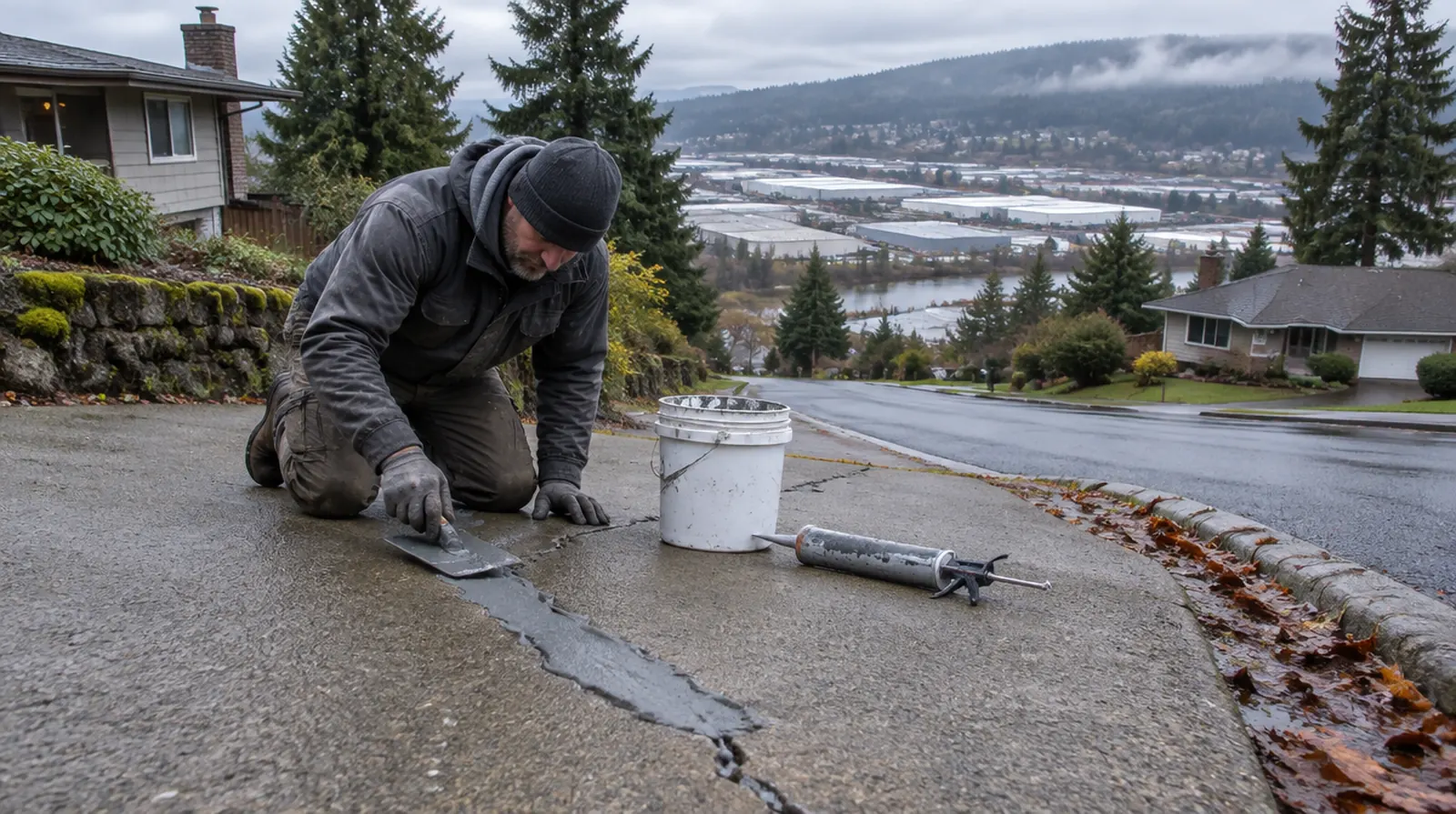
Hairline cracks are normal and can be filled to keep water out. Wider cracks are cleaned and filled with flexible or cement-based repair products. If a section has settled and created a trip hazard, we will tell you. Sometimes it can be leveled; sometimes replacing that piece is the better fix before coating.
The garage apron
The apron where the driveway meets the garage often gets the most staining from dripping cars. If you are also coating the garage floor, we can finish the apron in a coordinated color and texture so the transition looks intentional.
Scheduling around weather
Driveway work needs dry concrete and a dry forecast. We schedule during dry windows and will reschedule rather than risk applying over wet concrete. You will need to keep vehicles off the driveway for a day or more depending on the product.
Keeping it looking good
Rinse the driveway a few times a year, especially in fall when leaves and needles pile up. Clean oil spots promptly with absorbent and a mild degreaser. Clear moss before it takes hold. Depending on the system, reseal every few years to keep the protection strong.
Matching your home
Coated driveways can be tinted to complement siding, trim and roof colors. Neutral grays and warm tans are the most common choices because they hide dirt and suit most exteriors.
Commercial lots and walkways
We also restore entry drives, sidewalks and small lots at offices, apartments and retail centers. Clean, sealed concrete improves curb appeal and helps reduce slip complaints.
Restore your driveway
Call (000) 000-0000 for a free estimate.